
Borehole quality inspection is a critical component of pile foundation testing. National, transportation, and construction standards have specified clear requirements for testing the borehole quality of cast-in-place concrete piles. Among these methods, ultrasonic testing is widely adopted due to its higher detection accuracy and non-contact nature with the borehole wall.
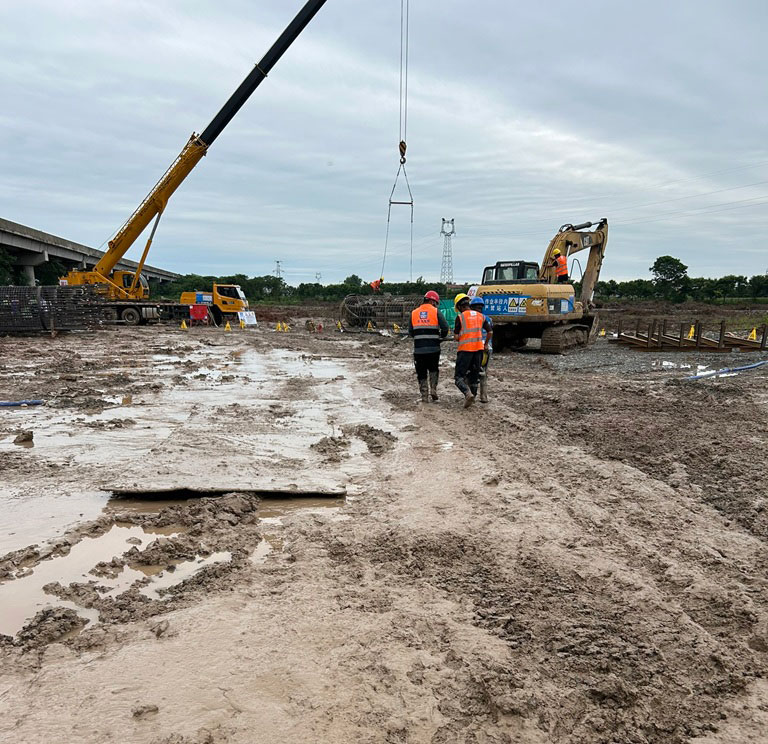
A project case is presented below: an ultrasonic borehole quality inspection for a new ring road in Wuhan, focusing on self-inspection of borehole quality and sediment thickness for bridge piles.
The designed borehole diameter is 1500 mm, with a depth of 33 m. The piles are friction piles, constructed by rotary drilling, and supported mainly by bentonite-based chemical slurry.

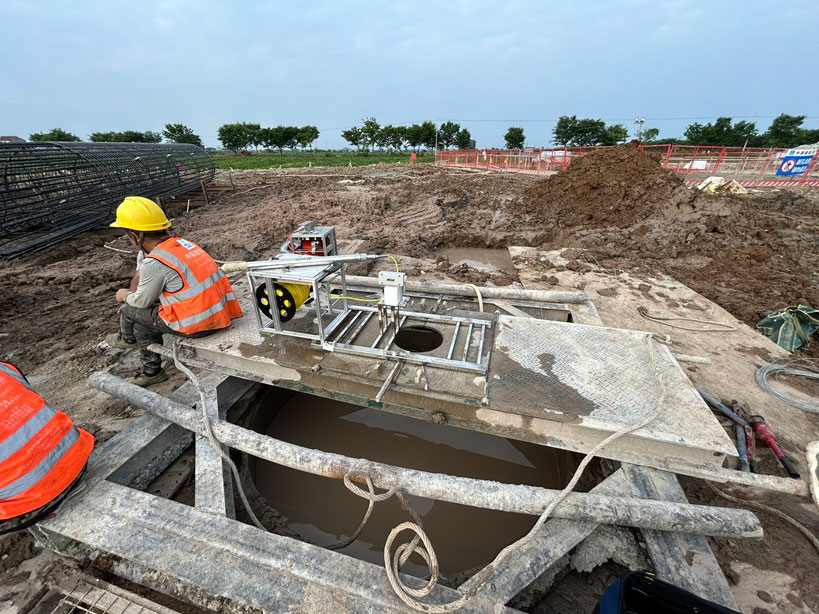
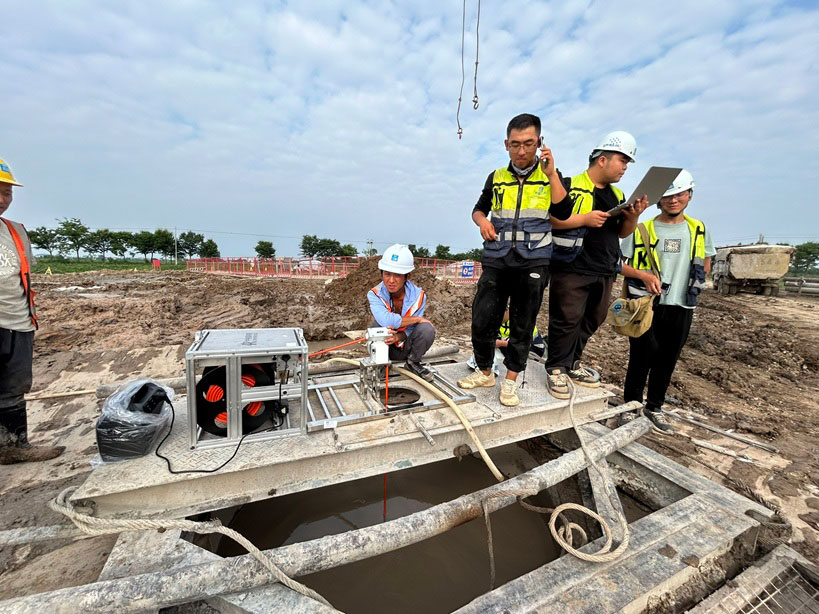
The borehole quality inspection was performed using our newly developed ultrasonic borehole quality detector. Equipped with a wireless integrated single-line electric winch, the instrument is significantly reduced in size and weight compared with the previous generation, making it highly convenient for on-site operation and transportation. During testing, a laptop was used to control the winch and monitor real-time data.
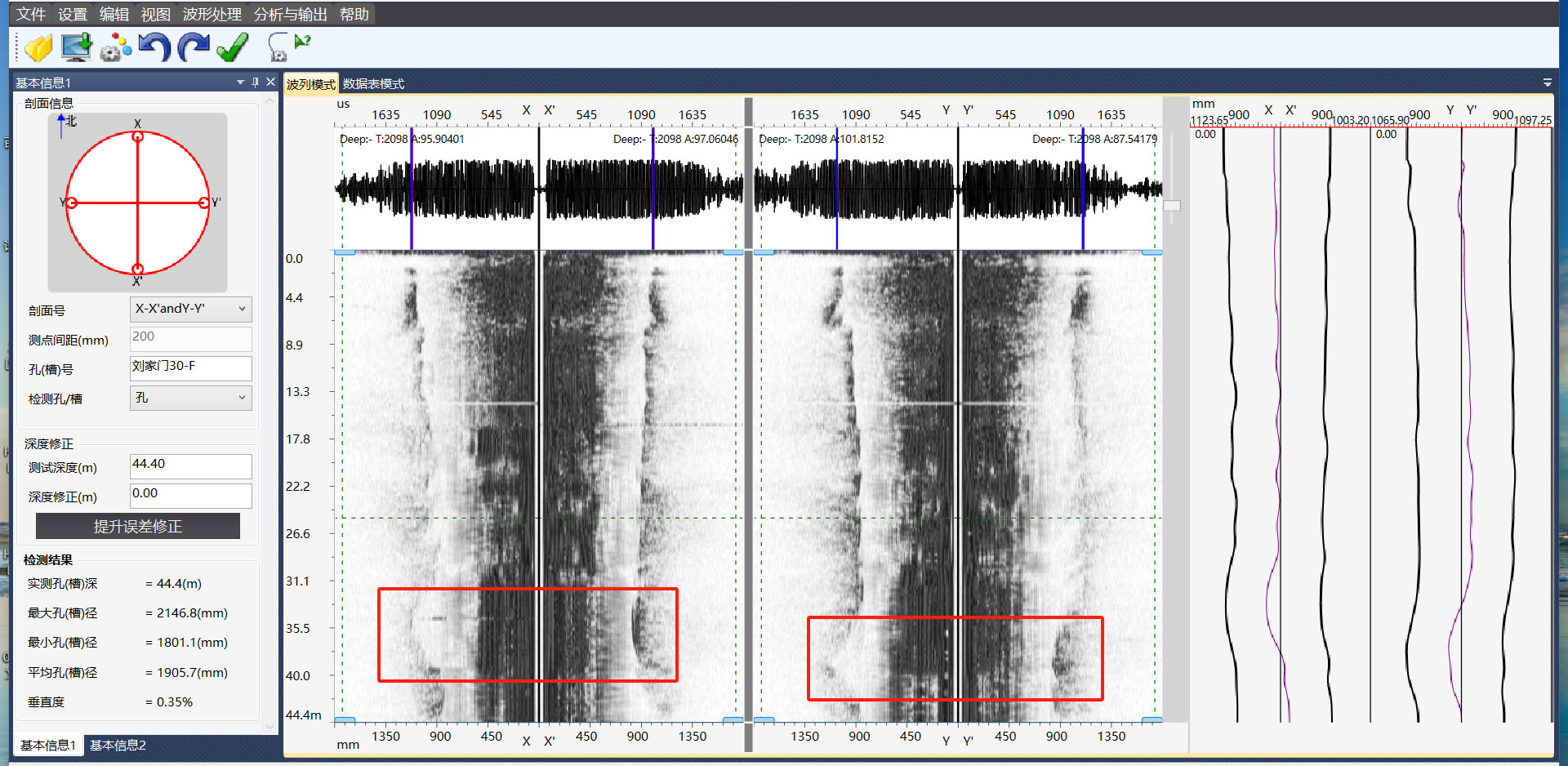
The detection results showed obvious distortion of the borehole wall profile at a depth of 31 m to 40 m, which may adversely affect pile integrity and load-bearing capacity by potentially forming defects at the distorted sections. Geological survey data confirmed that this interval consists of cobble stratum, which interferes with drilling stability. The construction team subsequently conducted secondary drilling for correction, and the borehole finally met the design specifications.
For rotary-drilled cast-in-place piles, controlling sediment thickness at the pile base is essential to construction quality. Excessive sediment not only reduces pile bearing capacity but also leads to excessive structural settlement. Therefore, accurate measurement of base sediment thickness is of great importance.
Immediately after borehole quality inspection, sediment thickness testing was carried out using a sediment thickness detector. This device features an upgraded profile manual winch with an innovative structure, paired with a high-performance wireless host. The redesign reduces dimensions and weight while enhancing stability and testing efficiency.
Test data clearly distinguished the interface between sediment and suspended residue, as well as that between suspended residue and slurry. The measured sediment thickness was approximately 10 mm, satisfying the design requirements.


